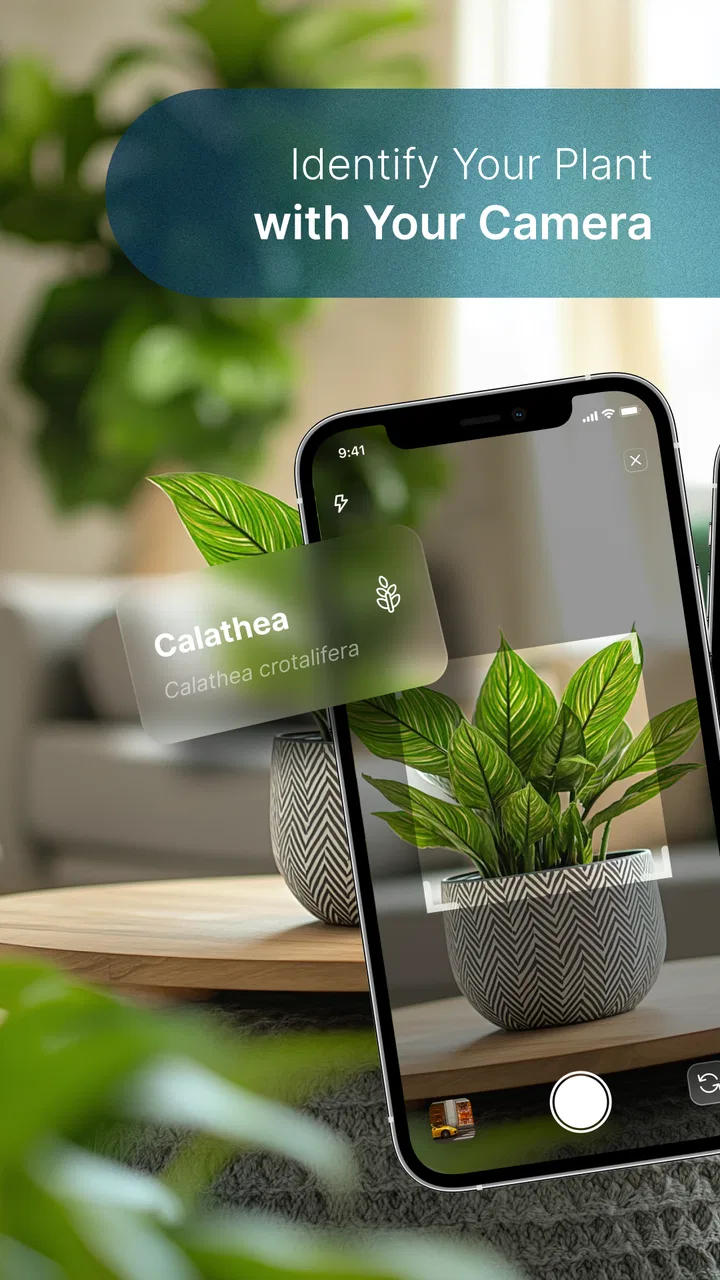
Plant Care - AI Identifier
- 3.9
- Rating
- 500.00K
- Installs
- Free
- Price

 Analysis by App-foxy
I approached Plant Care - AI Identifier as someone who wanted a quick answer about an unfamiliar houseplant, not as a botany student looking for a complete scientific reference. That distinction matters. This is a free education app from Goldlab Pro that uses AI-assisted plant identification as its central idea, with plant care guidance built around that first recognition step. In my experience, it feels most useful when I have a leaf, flower, or potted plant in front of me and need a practical starting point.
The app is available for everyone and runs on Android devices using version 6.0 or later. It has reached over 500 thousand installs and holds an average rating of 4.2 from around 887 ratings, which suggests that many people find the basic concept worthwhile. I would still treat the result as guidance rather than a final botanical verdict. A photo-based identifier can be extremely convenient, but lighting, camera angle, damaged leaves, and similar-looking species can all affect what it recognizes.
Getting from the first launch to a useful plant answer
I start with the practical question of what to expect when opening the app: a photo-based suggestion is most useful when I treat it as a first clue, not a final answer. A little care in choosing the image can make the result easier to assess, so next I’ll look at how to prepare a plant for a useful check.
You May Also Like

 Blood Strike: 2.5 Anniversary
Blood Strike’s Loadouts Turn Every Drop Into a Tactical Gamble
A close look at Blood Strike’s custom loadouts: how fast access to signature weapons reshapes its battle royale rhythm, rewards preparation, and narrows the gap between fights.

 Pandora - Music & Podcasts
Pandora’s Music Is Easy to Start, but Harder to Recover
Pandora’s strength is its low-effort path from a seed to a station. Its weak spot is how much confidence it asks you to place in connection, setup, and quiet recovery.

 8 Ball Pool
 Is Built on Rivalries, Rematches, and Routine
A close look at the rivalries, rematches, shared routines, and unanswered safety questions that turn a quick pool match into a persistent mobile community.

 Samsung Music
’s Quiet Strength Is Playing What You Already Own
Its reach comes less from spectacle than from dependable access to a personal library. That simplicity is both the app’s strongest retention engine and its ceiling.

 AccuWeather: Weather Radar
AccuWeather Review: A Quick, Clear Forecast for Everyday Decisions
For everyday plans, the best forecast is the one you can understand quickly. AccuWeather makes rain timing, radar, and local conditions easy to act on, with a few trade-offs.

 Hill Climb Racing
Why Hill Climb Racing Still Turns Crashes Into One More Run
A tiny car, a bumpy hill and one more upgrade: Hill Climb Racing keeps resurfacing because its simple chaos makes every near-miss feel personal.
More From Our News Desk



What to expect before you take a photo
The most important thing to understand is that this is not simply a static encyclopedia of plant names. Its appeal comes from reducing the distance between “What is this plant?” and “How should I look after it?” If I find an unlabeled plant at a garden center, inherit a cutting from a friend, or notice an unfamiliar volunteer plant in the yard, the app gives me a convenient way to begin investigating.
I would not open it expecting a replacement for a horticulture professional, a regional field guide, or a diagnosis from someone who can inspect roots and soil in person. The strongest use case is early orientation. Once I have a likely identity, I can ask better questions about light, watering, placement, and warning signs instead of searching blindly through dozens of unrelated plant pages.
The education category is a good fit because the app can encourage observation. I have to look closely at the plant, notice its leaf shape and growth pattern, and compare the result with what I see in front of me. That makes it more useful than a random web search when I have no vocabulary for the plant yet. It also makes the process more approachable for a beginner who would otherwise feel that plant care is full of confusing names.
One practical expectation is that the quality of the input affects the usefulness of the output. A rushed picture taken in a dark corner is less helpful than a clear view of a healthy leaf and the overall form of the plant. I find it sensible to take more than one image when the first result feels uncertain, then compare whether the suggested identity remains consistent. That simple habit is more valuable than accepting the first label automatically.
Setting up a first check without overthinking it
The initial setup is straightforward in concept: install the app, open the plant identification area, and prepare a specimen for examination. I recommend starting with a plant that is easy to move or photograph rather than beginning with a large outdoor tree. A small potted plant on a table gives better control over distance, background, and light, so the first experience is less frustrating.
Before taking the picture, I remove visual distractions where possible. Other leaves, patterned curtains, and crowded shelves can make a plant harder to isolate. I also avoid photographing a leaf that is badly folded, heavily shadowed, or covered by glare. If the plant has several distinct features, I try to include the shape of the leaves and the general structure rather than filling the entire frame with a tiny section.
This is one of the less obvious ways to get more from an AI identifier: use the camera as an observation tool, not just a scanner. While preparing the image, I naturally notice whether the leaves grow in pairs, whether the edges are smooth or serrated, and whether new growth looks different from older leaves. Even before the app responds, those details make later care advice easier to judge.
Plant Care - AI Identifier is free to download, but the app includes in-app purchases ranging from $4.99 to $29.99 per item. For a first-time user, I would begin with the free experience and decide only after understanding how often I actually need the app. Someone identifying one plant for a school project may have no reason to spend money, while a serious collector might consider additional paid access more relevant if it supports a repeated workflow.
I also like to keep the first test simple. Rather than photographing a plant with several problems at once, I choose one whose identity is the main question. This separates identification quality from care diagnosis. If I start with yellow leaves, pests, and a recently repotted specimen, it becomes harder to know whether an unsatisfying result comes from the photo, the plant’s condition, or my own expectations.
The first meaningful success: turning a label into a plan
A successful first session is not merely seeing a plant name. For me, the useful moment comes when the identification gives me a sensible next action. If the app suggests a likely plant and the visual description matches what I can inspect, I use that result as a working hypothesis. I then connect it to the plant’s current location and routine instead of changing everything immediately.
For example, imagine bringing home an unfamiliar plant from a friend and placing it on a bright windowsill. I photograph it, review the suggested identity, and use the care information to question whether that position makes sense. If the plant appears to prefer a different level of light, I make a modest adjustment and watch it over time rather than moving it repeatedly in one afternoon. The app helps me form a plan; it does not remove the need to observe the plant afterward.
That restraint is important. Beginners often react to a care guide by watering, feeding, repotting, and relocating a plant all at once. If the plant improves, they do not know why; if it declines, they have created several possible causes. I find Plant Care - AI Identifier more valuable when I use it to choose one sensible change, record what I did, and then reassess the leaves and soil later.
Another useful workflow is to photograph the same plant at different stages of a problem. The first image can document its condition before a change, while a later image shows whether new growth looks healthier. Even without treating the app as a formal plant journal, this creates a visual reference that is easier to remember than vague thoughts such as “it looked worse last week.”
When the plant is outdoors, I take the surrounding environment seriously. The same species may behave differently depending on local weather, wind, soil, and seasonal light. A likely identification can still be helpful, but I would compare the advice with the plant’s actual setting. Indoor care instructions should not be transferred mechanically to a balcony or garden, especially when temperature and rainfall are very different.
Where beginners commonly get confused
The first source of confusion is treating an AI suggestion as certainty. Similar plants can share leaf colors and shapes, and a young specimen may not resemble a mature one. If the suggested name conflicts with obvious features, I take another photo from a different angle and look for a broader match. I also avoid making a costly care decision based on one uncertain result.
The second confusion involves identification and diagnosis. Knowing the likely plant does not automatically explain why a leaf is turning brown. Browning can relate to watering habits, dry air, direct sun, damaged roots, pests, or the natural aging of an individual leaf. I use the identification as context, not as proof that the app has found the exact cause of a problem.
A third issue is the difference between a plant’s ideal conditions and the conditions a home can realistically provide. Care advice may describe a preference, but my room may have only one suitable window. In that situation, I would use the app to understand the trade-off and then choose the most stable location available. Constantly chasing a perfect instruction can stress the plant more than accepting a reasonable compromise.
Photo quality can also create misleading confidence. A close-up of one unusual leaf may make the plant appear to belong to a different group than it does. I get a more useful result by including a representative leaf and, when possible, enough of the plant’s shape to show how it grows. Removing dead leaves before photographing can be counterproductive because those symptoms may provide useful context, even if they should not dominate the image.
There is also a practical distinction between a common ornamental plant and a wild plant that someone might eat. I would never use an identification result from this app as the sole basis for consuming a mushroom, herb, berry, or other foraged specimen. The consequences of a mistaken identification are too serious. In that situation, an experienced local expert and multiple trusted references are better choices.
How it compares with ordinary alternatives
Compared with typing a description into a search engine, the app removes the need to know the right words. Searching for “green plant with long leaves” produces a wide range of possibilities, while a photo gives the process a concrete starting point. I find that especially helpful when I am dealing with a plant whose name I have never heard.
Compared with a traditional printed field guide, the app is faster for casual indoor use and easier to carry from room to room. A book remains stronger when I want regional context, detailed botanical distinctions, or a dependable way to compare many related species without relying on an automated guess. For a walk in an area with distinctive local flora, I would still value a specialist guide alongside the app.
Compared with asking a gardening community, Plant Care - AI Identifier offers immediate feedback and does not require waiting for someone to see a post. A community can be better when the plant is diseased, the image is ambiguous, or the question depends on local conditions. Experienced growers may notice subtle clues that a general-purpose visual tool misses, particularly around pests and root problems.
Compared with a general plant-care reminder app, this one is more appealing at the discovery stage. A reminder system is useful once I already know the plant and have established a routine. Plant Care - AI Identifier is more relevant when the basic identity is still unclear. I would not choose it solely for scheduling tasks if identification is not something I need.
Who will get the most value from it
I think the app suits new plant owners, families learning plant names together, students beginning a botany assignment, and casual gardeners who regularly encounter unfamiliar specimens. It is also handy for someone moving into a new home with plants left behind by a previous resident. In each case, the main benefit is reducing the intimidation of the first question.
It can help experienced growers too, but in a narrower role. A collector may use it as a quick screening tool for an unlabeled purchase or cutting before checking a specialist source. The experienced user is more likely to recognize when the result needs verification, which makes the app safer and more useful in that context.
I would skip it if my main need is a rigorous botanical reference, a guaranteed diagnosis, or highly localized advice for valuable crops. I would also avoid relying on it for poisonous or edible plants, legally sensitive species, or any situation where a wrong label could cause harm. In those cases, the convenience of a quick image result is not worth treating it as the final authority.
Small habits that make the app more useful
My first tip is to photograph before changing the plant. If I water, prune, or move it first, I lose a clear record of its original condition. The initial image becomes a baseline, especially when the purpose is to understand a decline rather than simply name a healthy specimen.
My second tip is to use the app at the point of purchase or exchange, when possible. Identifying a plant before bringing it home can reveal whether its likely care needs match the light and space I have available. That prevents the common mistake of choosing a beautiful plant first and discovering later that its preferred environment is impossible in my room.
My third tip is to treat uncertainty as a prompt for a better image. Instead of repeatedly tapping for an answer, I change one variable: brighter indirect light, a cleaner background, a wider view, or a different leaf. This turns a vague result into a controlled comparison and teaches me which visual details matter.
My fourth tip is to separate advice into “now” and “later.” If a plant looks stressed, I first address low-risk basics such as checking the soil and reviewing its light exposure. I postpone drastic actions such as repotting until I have stronger evidence. The app is most helpful when it supports this calm sequence rather than encouraging an instant overhaul.
What the current release means for a first-time user
The current version is 2.2, and the app was released on August 22, 2024. For someone installing it today, the practical takeaway is that this is a relatively focused tool built around accessible plant recognition and care learning, not an all-purpose gardening suite. I would judge it by how quickly it helps me move from an unknown plant to a sensible care question.
The Everyone content rating makes it approachable for households and classrooms, although younger users should still be guided away from treating plant identification as permission to taste or handle unknown species. The educational value is strongest when a parent, teacher, or beginner uses the result as the beginning of a discussion: What features led to this suggestion? Does the plant’s environment fit? What should we observe next?
Because the app is free to start, the barrier to testing that workflow is low. The paid items are the main point where I would slow down and evaluate personal value. I would not purchase anything simply because a result is uncertain; uncertainty is often better addressed with a clearer image or a second opinion. A paid option makes more sense only when the app has already become part of a regular plant routine.
My recommendation after using it as a beginner’s guide
Plant Care - AI Identifier is a useful first stop for people who want to recognize plants without learning a full botanical vocabulary first. I like its practical bridge between visual identification and everyday care decisions. It is especially reassuring during the first few minutes with an unfamiliar houseplant, when a clear next question is more valuable than a long technical explanation.
My recommendation comes with a firm boundary: use the result as an informed starting point, not as an unquestionable diagnosis or safety guarantee. Take clear photos, compare the suggestion with the plant itself, make one change at a time, and seek specialist help when the stakes are high. Used that way, the app earns its place as a convenient learning companion.
For a first-time user, I would install it, test it on a healthy plant, and see whether the identification and care guidance fit the way I actually garden. If I mainly need reminders, a specialist field guide, or expert disease diagnosis, another type of tool may serve me better. If I want a friendly way to turn an unknown plant into a manageable care plan, Goldlab Pro’s app is a sensible place to begin.
FAQs for Plant Care - AI Identifier
01What are the main features of Plant Care - AI Identifier?
Plant Care - AI Identifier offers a range of features designed to help you care for your plants efficiently. The app uses AI technology to identify plants by simply taking a photo, providing detailed information on care instructions, watering schedules, and potential pest issues. It also offers reminders for watering and fertilizing, making plant care a breeze.
02How accurate is the plant identification feature in the app?
The plant identification feature in Plant Care - AI Identifier is powered by advanced AI algorithms, boasting a high accuracy rate. While it correctly identifies most common species, accuracy may vary with less common plants or poor-quality photos. However, continuous updates and community feedback help improve its precision over time.
03Is Plant Care - AI Identifier free to use?
Plant Care - AI Identifier offers a free version with basic features, including plant identification and care tips. For a more comprehensive experience, such as advanced reminders and an ad-free interface, users can opt for a premium subscription. This paid version provides extended functionalities and supports the app's development.
04Can I use the app offline?
While Plant Care - AI Identifier requires an internet connection for features like plant identification and database updates, it does allow offline access for previously downloaded care instructions and reminders. This ensures you can still manage your plant care tasks even without a stable internet connection.
05What kind of plants can the app identify?
The app is designed to identify a wide variety of plants, including indoor plants, garden flowers, succulents, and trees. It covers thousands of species, making it a versatile tool for both novice and experienced plant enthusiasts. Regular updates expand its database, further enhancing its identification capabilities.
Pros
- Accurate plant identification using AI.
- User-friendly interface for all ages.
- Comprehensive care tips for each plant.
- Offline mode available for plant info.
- Regular updates with new plant data.
Cons
- Occasional misidentification errors.
- Limited free features
- subscription needed.
- Some features require internet access.
- In-app ads can be distracting.
- Database lacks some rare plant species.

Plant Care - AI Identifier
Gallery